
Knee Pain After Cycling: Causes, Prevention and How Physiotherapy Can Help
Cycling is an excellent way to stay active, improve cardiovascular health and build lower-body strength. Whether you enjoy weekend bike rides, daily cycling, indoor spinning classes or long-distance road cycling, it offers several physical and mental health benefits.
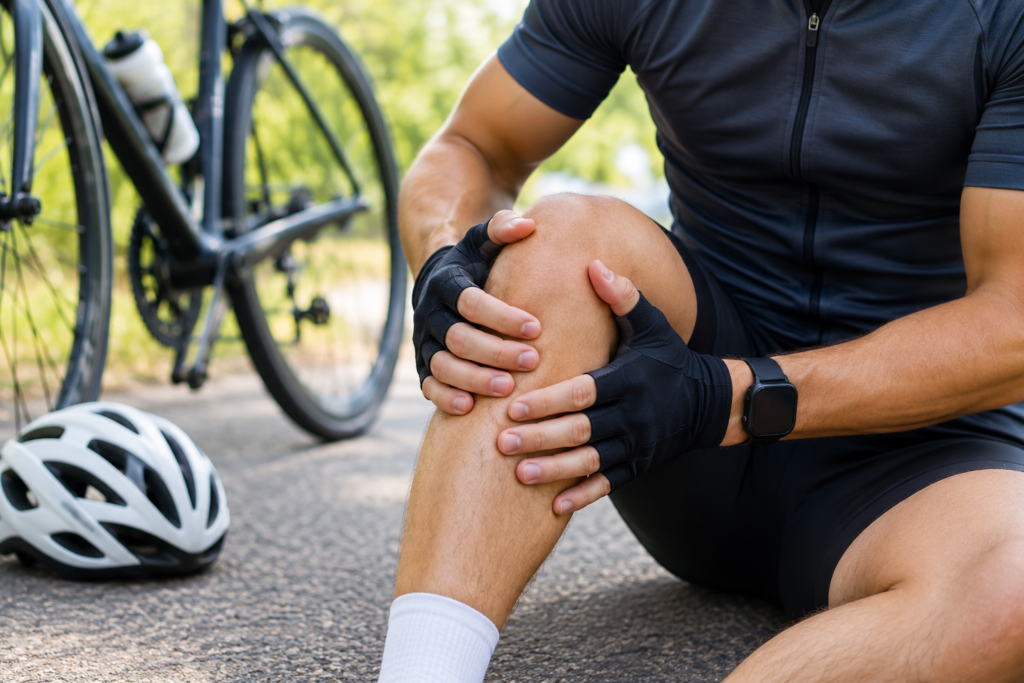
However, many cyclists experience knee pain during or after riding. What starts as mild discomfort can gradually become a recurring problem, affecting workout routines, cycling performance and everyday activities.
Knee pain after cycling is relatively common, particularly when training intensity increases, cycling techniques are incorrect or the body does not have enough time to recover between sessions.
The good news is that many cycling-related knee problems can be managed with appropriate training adjustments, strengthening exercises and professional physiotherapy.
In this guide, we explore the common causes of knee pain after cycling, the symptoms to watch for, ways to prevent discomfort and how physiotherapy can help you return to cycling comfortably.
1. Why Does Cycling Cause Knee Pain?
Cycling is generally considered a low-impact exercise because it places less direct impact on the joints than activities such as running and jumping.
However, your knees still perform thousands of repetitive movements during a cycling session.
Every time you push down on the pedals, your knee bends and straightens while the surrounding muscles, tendons and ligaments work together to control movement.
When these movements are repeated over long periods, even small problems with technique, positioning or training intensity can contribute to discomfort.
Some common reasons cyclists experience knee pain include:
- Incorrect bicycle seat height.
- Poor cycling posture or bike positioning.
- Increasing cycling distance too quickly.
- Weak quadriceps, hamstrings or hip muscles.
- Limited flexibility and mobility.
- Insufficient recovery between rides.
- Incorrect pedal or cleat positioning.
In many cases, cycling-related knee pain develops gradually rather than following a single injury.
Understanding the underlying cause is important because treating the discomfort without addressing its source may lead to recurring symptoms.
2. Common Types of Knee Pain Experienced by Cyclists
Knee pain does not always feel the same. The location of the discomfort can sometimes provide clues about the structures involved.
Here are some common types of knee pain associated with cycling.
A. Front Knee Pain (Patellofemoral Pain)
Pain around or behind the kneecap is commonly associated with patellofemoral pain.
The kneecap, also known as the patella, moves along a groove at the front of the thigh bone as the knee bends and straightens.
Cycling places repeated demands on this movement, especially during longer rides or sessions involving higher resistance.
Possible contributing factors include:
- Sudden increases in cycling intensity.
- Weakness in the quadriceps and hip muscles.
- Poor control of lower-limb movement.
- Incorrect saddle positioning.
- Repeated training without sufficient recovery.
You may notice discomfort when climbing hills, cycling against heavy resistance, climbing stairs or performing squats.
B. Pain on the Outside of the Knee (IT Band-Related Pain)
The iliotibial band, commonly called the IT band, is a thick band of connective tissue running along the outside of your thigh.
IT band-related pain can develop when repetitive activity irritates the tissues around the outer knee.
Cyclists may experience:
- Pain on the outside of the knee.
- Discomfort that increases during longer rides.
- Tenderness around the outer knee.
- Pain that becomes noticeable after repeated pedalling.
Training volume, bike positioning and individual movement patterns can contribute to this problem.
A physiotherapist can assess the surrounding muscles, hip control and cycling mechanics to identify possible contributing factors.
C. Pain Behind the Knee
Pain at the back of the knee can have several possible causes.
These may include hamstring tendon irritation, calf muscle problems or other structures around the knee joint.
Potential contributing factors include:
- Saddle positioning that encourages excessive knee extension.
- Increased cycling intensity.
- Tight or overloaded hamstring muscles.
- Sudden changes in training volume.
Persistent pain behind the knee should be assessed rather than ignored, particularly if swelling or restricted movement is present.
D. Inner Knee Pain
Pain along the inner side of the knee may involve structures such as the medial collateral ligament, surrounding tendons or the joint itself.
Cyclists may notice discomfort when pedalling, walking or bending the knee.
Possible contributing factors include repetitive loading, altered knee movement and bike positioning.
The exact cause cannot be determined by pain location alone, so a proper assessment is important.
3. The Role of Incorrect Bike Fit in Knee Pain
One of the most overlooked contributors to cycling-related discomfort is incorrect bicycle positioning.
Your bicycle should allow your body to move comfortably and efficiently throughout each pedal stroke.
Even small adjustments to saddle height, saddle position and pedal alignment can change how your knees move during cycling.
Saddle Height
A saddle that is too high may encourage excessive knee extension at the bottom of the pedal stroke.
A saddle that is too low can increase knee flexion and may place additional demands on the structures around the front of the knee.
Both situations may contribute to discomfort.
Saddle Position
The forward or backward position of your saddle can influence how your body distributes force while pedalling.
An unsuitable position may change the loading demands on your knees and surrounding muscles.
Cleat and Pedal Position
For cyclists using clipless pedals, cleat positioning can influence foot alignment and lower-limb movement.
Incorrect positioning may contribute to discomfort around the knee, particularly during repetitive training.
What should you do?
If you regularly experience knee pain while cycling, consider getting your bicycle fit assessed by a qualified bike-fitting professional. A physiotherapist can also evaluate your movement patterns and identify physical factors contributing to discomfort.
4. How Training Mistakes Contribute to Cycling Knee Pain
Sometimes the bicycle is not the main problem. Your training routine may also contribute to knee discomfort.
Many cyclists become enthusiastic about improving their speed, endurance and distance. However, increasing training demands too quickly can exceed the body’s current ability to adapt.
Here are some common training mistakes to avoid.
Increasing distance too quickly
If you usually cycle for 30 minutes and suddenly start riding for 90 minutes, your knees may struggle to adapt to the increased workload.
Gradual progression allows your muscles and joints to adjust to new physical demands.
Using excessive resistance
Cycling with heavy resistance places greater demands on the muscles around your knees.
Regularly pushing high resistance without adequate preparation may contribute to overuse symptoms.
Ignoring rest days
Muscles and other tissues need time to recover after exercise.
Cycling intensely every day without sufficient recovery may increase the risk of developing persistent discomfort.
Skipping warm-ups
Starting an intense cycling session without preparing your body may make the activity feel more difficult.
A few minutes of easy cycling and gentle dynamic movements can help prepare you for your workout.
5. Exercises to Help Strengthen Your Knees for Cycling
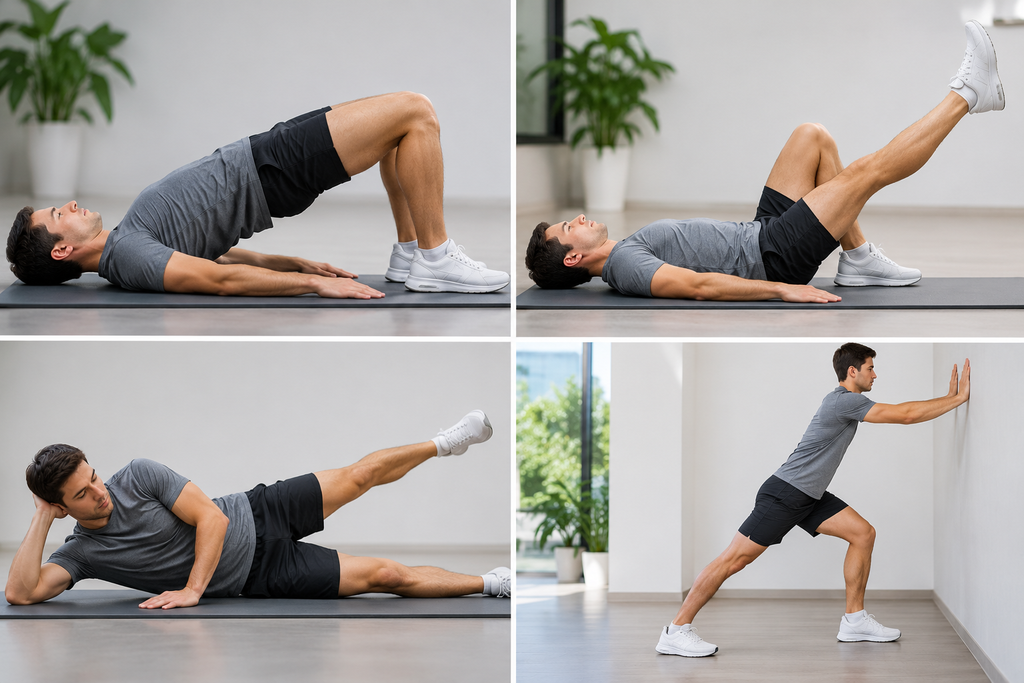
Strengthening the muscles around your hips, thighs and knees can improve your ability to tolerate cycling demands.
The following exercises may be useful additions to a suitable strengthening programme.
However, exercises should be selected according to your symptoms, fitness level and physical assessment. Stop any movement that causes significant or increasing pain.
1. Quadriceps Strengthening
<ins>Exercise: Straight Leg Raises</ins>
Straight leg raises help activate the quadriceps muscles, which play an important role in controlling knee movement.
How to perform:
- Lie on your back with one knee bent and the other leg straight.
- Tighten the thigh muscle of the straight leg.
- Slowly lift the leg approximately 30–45 degrees.
- Hold briefly before lowering it with control.
- Repeat on the opposite side.
Perform 2–3 sets of 10–12 repetitions if comfortable.
2. Glute Strengthening
<ins>Exercise: Glute Bridges</ins>
Your gluteal muscles help control hip movement and contribute to lower-limb stability during cycling.
How to perform:
- Lie on your back with both knees bent.
- Keep your feet flat on the floor.
- Tighten your abdominal muscles gently.
- Lift your hips until your shoulders, hips and knees form a comfortable straight line.
- Hold for a few seconds and slowly lower your hips.
Perform 2–3 sets of 10–15 repetitions.
3. Hamstring Strengthening
<ins>Exercise: Hamstring Curls</ins>
The hamstrings work alongside other muscles to control knee movement.
How to perform:
- Stand upright while holding a stable surface for support.
- Slowly bend one knee, bringing your heel towards your glutes.
- Keep your thighs relatively close together.
- Lower your foot slowly.
- Repeat with the other leg.
Perform 2–3 sets of 10–12 repetitions.
4. Hip Stability
<ins>Exercise: Side-Lying Leg Raises</ins>
Strengthening the muscles around your hips can help improve control of your lower limbs.
How to perform:
- Lie on your side with both legs extended.
- Keep your upper leg straight.
- Slowly lift it without rotating your hips.
- Hold briefly and lower it with control.
- Repeat on the other side.
Perform 2–3 sets of 10–12 repetitions.
5. Mobility Exercise
<ins>Exercise: Standing Calf Stretch</ins>
Calf flexibility contributes to comfortable ankle movement during everyday activities and exercise.
How to perform:
- Stand facing a wall.
- Place both hands against the wall.
- Move one leg behind you.
- Keep the back heel on the floor.
- Gently lean forward until you feel a stretch in your calf.
- Hold for 20–30 seconds.
Repeat 2–3 times on each side.
Remember that strengthening exercises are not a substitute for an individual assessment when knee pain is persistent or unexplained.
6. How to Prevent Knee Pain After Cycling
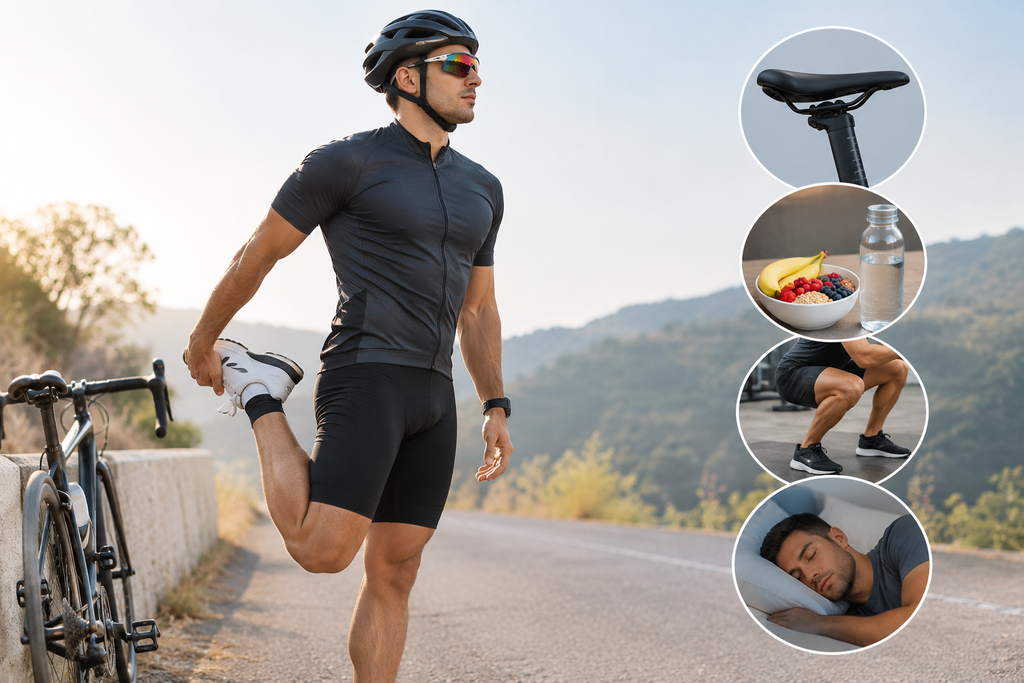
Preventing cycling-related knee pain involves more than simply stretching before a ride.
Your training routine, bicycle setup, strength and recovery habits all play important roles.
Here are some practical steps to help protect your knees.
1. Adjust your bicycle correctly
Make sure your saddle height, saddle position and pedal setup allow comfortable movement throughout the pedal stroke.
If you regularly experience discomfort, consider a professional bike-fit assessment.
2. Increase training gradually
Avoid suddenly increasing your cycling distance, resistance or duration.
Give your body enough time to adapt when introducing new training demands.
3. Include strength training
Cycling mainly involves repetitive lower-body movement. Complementing it with appropriate strength training can help improve muscular capacity.
Focus on exercises for your quadriceps, hamstrings, glutes and calf muscles.
4. Warm up before cycling
Start with 5–10 minutes of easy cycling before increasing your intensity.
Gentle mobility exercises can also help prepare your body for the activity.
5. Prioritise recovery
Allow adequate recovery between demanding sessions.
Pay attention to unusual fatigue, persistent soreness and changes in your cycling performance.
6. Maintain good cycling technique
Avoid forcing heavy resistance when your body is not ready.
Use a comfortable gear and maintain a controlled pedalling rhythm.
7. Do not ignore recurring pain
Occasional muscle fatigue after exercise is different from recurring joint pain.
If discomfort repeatedly appears during or after cycling, seek professional advice rather than continuing to push through it.
7. When Should You See a Physiotherapist for Cycling Knee Pain?
Many cyclists initially ignore knee discomfort because they assume it is simply part of exercising.
However, persistent or worsening pain should not be treated as normal workout soreness.
Consider consulting a physiotherapist if you experience:
- Knee pain that returns after every cycling session.
- Discomfort when climbing stairs or walking.
- Swelling around the knee.
- Reduced knee movement.
- Difficulty performing squats or other exercises.
- Pain that affects your ability to exercise.
- Recurring discomfort despite reducing your cycling intensity.
Seek prompt medical assessment if you experience a major injury, inability to bear weight, significant swelling, a locked knee, or a hot, red knee accompanied by fever.
Early assessment can help identify the problem and guide appropriate treatment before it significantly affects your daily activities.
8. How Physiotherapy Can Help With Cycling-Related Knee Pain
Physiotherapy can play an important role in managing knee pain, improving movement and helping cyclists return to their preferred activities.
Rather than focusing only on the painful area, physiotherapy looks at how different parts of your body work together during movement.
At MM Physio, a physiotherapy assessment can help identify potential factors contributing to knee discomfort and guide an appropriate recovery programme.
Depending on your individual condition, your physiotherapy programme may include:
Comprehensive Physical Assessment
Your physiotherapist may evaluate:
- Knee movement and flexibility.
- Quadriceps and hamstring strength.
- Hip and ankle mobility.
- Lower-limb movement patterns.
- Balance and muscular control.
- Activity levels and training history.
This helps establish a clearer understanding of your physical limitations and recovery requirements.
Individualised Exercise Programmes
Exercise-based rehabilitation can help improve muscular strength, joint control and tolerance to physical activity.
Your programme may include progressive strengthening, mobility exercises and functional movements based on your assessment.
Manual Therapy
Where appropriate, hands-on techniques may be used alongside exercise to help manage symptoms and improve movement.
The treatment approach depends on your condition and clinical findings.
Sports Rehabilitation
For cyclists who want to return to regular training, rehabilitation may gradually introduce movements and exercises that reflect the demands of cycling.
The aim is to improve your ability to tolerate physical activity rather than simply reduce discomfort temporarily.
Guidance on Returning to Cycling
Returning to cycling too quickly can sometimes lead to recurring symptoms.
A physiotherapist can help guide your return based on your symptoms, strength, movement and tolerance to training.
The goal is to help you resume cycling safely and confidently.
9. Can You Continue Cycling If You Have Knee Pain?
This depends on the severity and cause of your discomfort.
Not every instance of knee pain means you must stop all physical activity. However, continuing to cycle through significant or worsening pain may aggravate the problem.
Consider these general guidelines:
- Reduce cycling intensity if discomfort develops.
- Avoid heavy resistance and steep climbs while symptoms are being assessed.
- Choose shorter, easier rides only if they are comfortable.
- Avoid movements that cause increasing pain.
- Allow sufficient recovery between sessions.
- Seek professional assessment if symptoms persist.
If you experience sharp pain, significant swelling or difficulty bearing weight, stop cycling and seek medical assessment.
The right approach is to maintain an appropriate level of activity while allowing the affected tissues to recover.
10. Get Back to Cycling Comfortably With MM Physio
Cycling should be an enjoyable activity that supports your health, fitness and overall well-being.
Whether you cycle for recreation, participate in long-distance rides or use cycling as part of your fitness routine, recurring knee pain should not become something you simply learn to tolerate.
Understanding the possible causes, improving your training habits and building strength can make an important difference in your recovery.
At MM Physio, we believe that physiotherapy should focus on helping people move better, manage pain and return to the activities they enjoy.
Our physiotherapy team works with individuals experiencing different movement-related concerns and can help guide an appropriate treatment and rehabilitation plan based on their needs.
If knee pain is affecting your cycling routine, consider booking a physiotherapy assessment to understand what may be contributing to your symptoms.
Stay active. Move confidently. Get back to doing what you love with MM Physio.
Visit MM Physio to learn more about our physiotherapy services and available clinic locations.
Frequently Asked Questions (FAQs)
1. Why do my knees hurt after cycling?
Knee pain after cycling may be associated with incorrect bicycle positioning, sudden increases in training intensity, muscle weakness, repetitive loading or movement-related issues. Identifying the underlying cause is important for choosing the right treatment.
2. Is cycling bad for your knees?
Cycling is generally a low-impact activity and can be suitable for many people. However, incorrect bike positioning, excessive resistance and sudden increases in training volume may contribute to knee discomfort.
3. How can I stop knee pain while cycling?
Check your bicycle setup, gradually increase training intensity, strengthen your leg muscles and allow adequate recovery. If pain continues, consult a physiotherapist for an individual assessment.
4. Should I stop cycling if my knee hurts?
You may need to reduce or temporarily stop cycling depending on the severity of your symptoms. Avoid pushing through increasing pain and seek professional advice if discomfort persists.
5. Can physiotherapy help with cycling-related knee pain?
Yes. Physiotherapy can help identify contributing factors, improve strength and mobility, manage symptoms and guide a gradual return to cycling through an individualised rehabilitation programme.
6. How long does it take for cycling-related knee pain to improve?
Recovery time depends on the underlying cause, severity of symptoms, training demands and individual response to treatment. Some problems improve with appropriate activity modification, while others require a longer rehabilitation programme.
7. What exercises strengthen the knees for cycling?
Exercises such as straight leg raises, glute bridges, hamstring curls and controlled lower-body strengthening can help improve muscular support for cycling. Exercise selection should depend on your physical condition and symptoms.
8. When should I see a physiotherapist for knee pain?
Consult a physiotherapist if knee pain keeps returning, affects your cycling performance, causes difficulty with daily activities or does not improve with appropriate adjustments to your training.