
Knee Pain When Walking, Climbing Stairs, or Sitting: Causes and Physiotherapy Treatment
Knee pain can make everyday activities more difficult than they should be. Walking to work, climbing stairs, getting up from a chair, or sitting through a long meeting may become uncomfortable when your knee hurts.
You might notice a dull ache around your kneecap, stiffness after sitting for a while, discomfort when walking downhill, or pain when bending your knee. Sometimes these symptoms develop gradually. In other cases, knee pain begins after an injury, a sudden change in physical activity, or an increase in exercise intensity.
The good news is that many causes of knee pain can be managed with the right assessment, activity adjustments, and an appropriate rehabilitation plan. However, the best treatment depends on what is causing your symptoms.
In this guide, we explain why your knee might hurt when walking, climbing stairs, or sitting, what you can do to manage the discomfort, when to seek professional advice, and how physiotherapy may help you return to your everyday activities.
Why Does My Knee Hurt When Walking, Climbing Stairs, or Sitting?
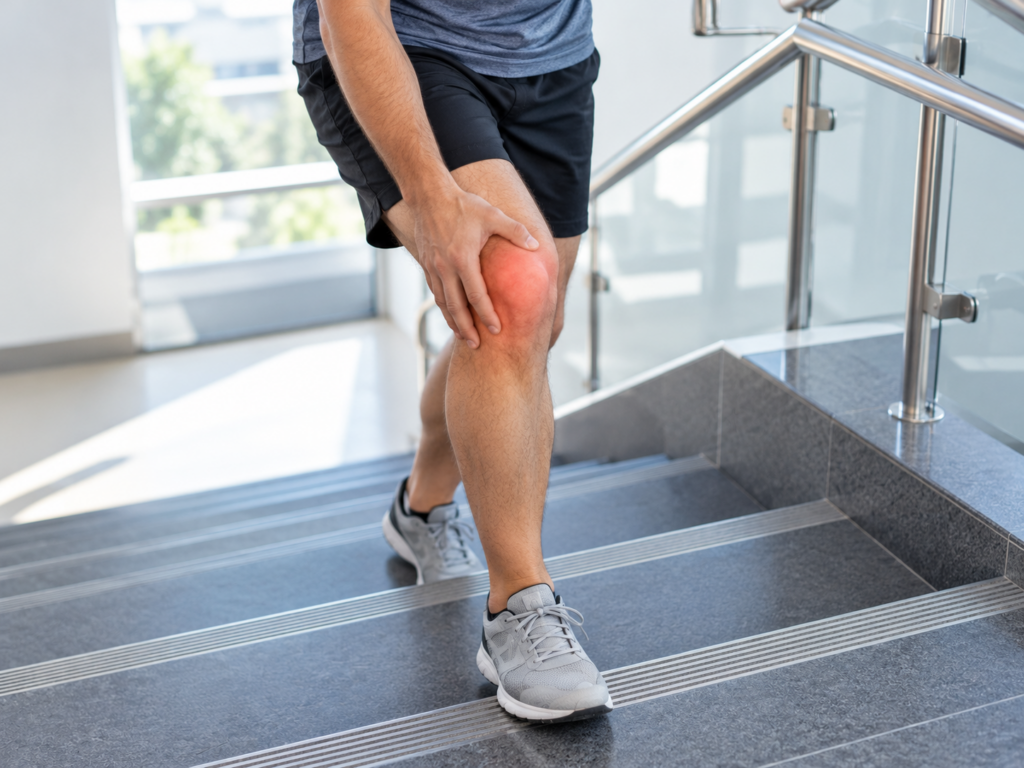
Your knee is a complex joint that helps support your body weight and allows you to walk, bend, straighten, squat, and climb stairs. It relies on the coordinated function of bones, cartilage, ligaments, tendons, muscles, and other surrounding tissues.
When one or more of these structures becomes irritated, injured, or affected by an underlying condition, everyday movements can become uncomfortable.
The activity that triggers your pain can provide useful information, although it cannot confirm a diagnosis on its own.
1. Knee Pain When Climbing or Descending Stairs
Climbing stairs requires your thigh and hip muscles to work together to control knee movement and support your body weight. Descending stairs also requires controlled lowering of your body against gravity.
If the tissues around your kneecap are sensitive, these activities may increase discomfort.
One possible cause is patellofemoral pain, which refers to pain around or behind the kneecap. It is often aggravated by stairs, squatting, running, and prolonged sitting with the knee bent.
Other possible causes include tendon irritation, osteoarthritis, or an injury involving structures inside or around the knee.
What you may notice:
- Pain around or behind the kneecap.
- Discomfort when going up or down stairs.
- Pain during squats or lunges.
- Difficulty standing up from a low chair.
If stair climbing consistently causes pain, a physiotherapy assessment can help identify which movements and physical demands may be contributing to your symptoms.
2. Knee Pain After Sitting for a Long Time
Have you ever sat through a long meeting or watched a film, only to notice knee discomfort when you stand up?
Pain after prolonged sitting with the knee bent is sometimes called “moviegoer’s knee.” It can occur with patellofemoral pain, although other knee conditions can also cause stiffness or discomfort after inactivity.
Remaining in one position for an extended period may make symptoms more noticeable, particularly when the knee is already irritated.
What you may notice:
- Discomfort around the kneecap after sitting.
- Stiffness when standing up.
- Pain during the first few steps after getting out of a chair.
- Symptoms that ease somewhat after gentle movement.
What may help: If comfortable, change positions regularly and take short movement breaks. Avoid forcing the knee into painful positions, and gradually return to activity as symptoms allow.
If the discomfort persists, worsens, or interferes with daily life, consider getting the knee assessed.
3. Knee Pain While Walking
Walking places repeated loads through the knee. The amount of force and the way your knee moves can vary with your pace, walking distance, terrain, footwear, and physical condition.
Knee pain during walking may be associated with several conditions, including:
- Patellofemoral pain: Discomfort around or behind the kneecap.
- Knee osteoarthritis: Pain and stiffness that may become more noticeable during weight-bearing activities.
- Tendinopathy: Irritation of a tendon, sometimes associated with repetitive loading.
- Meniscus injury: Pain that may occur after twisting the knee, sometimes accompanied by swelling, catching, or restricted movement.
- Ligament injury: Pain and possible instability following a sudden twist, impact, or other injury.
The location of your pain, when it started, whether the knee is swollen, and how it responds to movement can all help guide an assessment.
If walking makes you limp or significantly increases your discomfort, reduce the activity to a tolerable level rather than pushing through worsening pain.
4. Knee Pain When Bending or Straightening
Bending and straightening your knee are essential for walking, sitting, standing, and using stairs.
Pain during these movements may be associated with joint irritation, tendon problems, osteoarthritis, or injuries affecting the cartilage, meniscus, or ligaments.
Pay attention to whether you experience pain throughout the movement or only at a particular point. Also notice whether your knee feels stiff, swollen, unstable, or physically blocked.
A knee that becomes locked or cannot be fully straightened requires prompt medical assessment, particularly after an injury.
Common Causes of Knee Pain
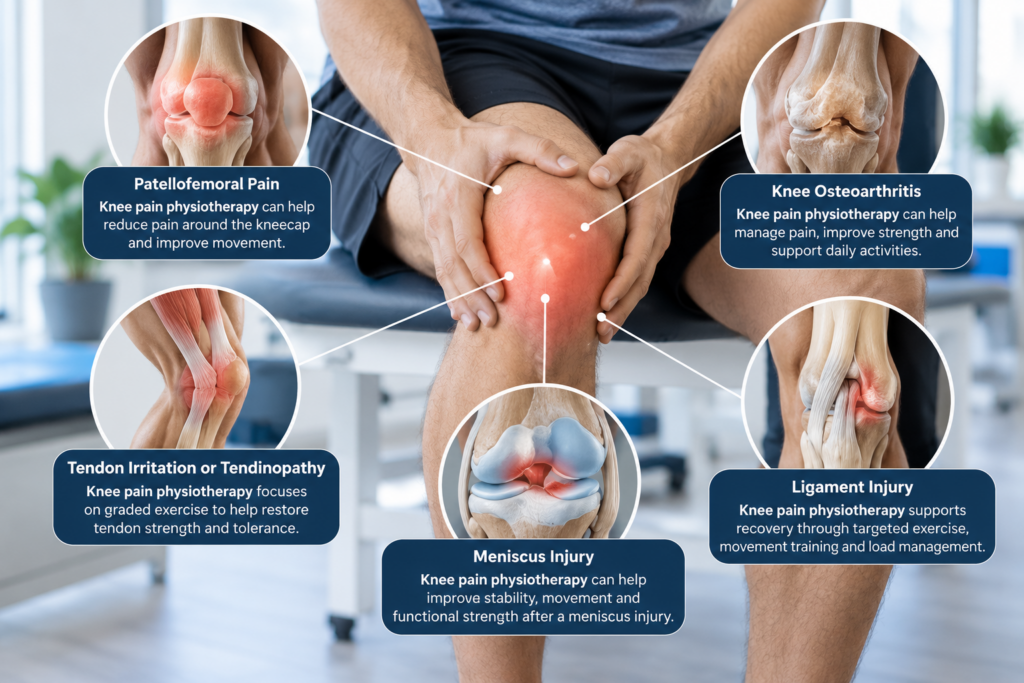
Knee pain is a symptom rather than a diagnosis. Understanding some common causes can help you recognise when an assessment may be useful.
“According to the NHS guide to knee pain, knee pain can have several causes, including injuries, tendon problems and osteoarthritis.”
Patellofemoral Pain
Patellofemoral pain occurs around or behind the kneecap and is commonly aggravated by activities that load the knee while it is bent.
Symptoms may include discomfort during stair climbing, squatting, running, or prolonged sitting.
Contributing factors can include a sudden increase in activity, reduced strength or capacity in the hip and thigh muscles, and changes in how the knee tolerates repeated loading.
Treatment commonly focuses on managing aggravating activities and gradually rebuilding strength and movement capacity.
Knee Osteoarthritis
Osteoarthritis involves changes in the joint tissues and can cause pain, stiffness, and reduced mobility.
People with knee osteoarthritis may notice discomfort when walking, standing for long periods, or climbing stairs. Stiffness can also occur after periods of inactivity.
Osteoarthritis does not affect everyone in the same way. Symptoms and functional limitations vary from person to person.
Exercise, strengthening, activity modification, and education are important parts of conservative management for many people with knee osteoarthritis.
Tendon Irritation or Tendinopathy
Tendons connect muscles to bones and help transfer force during movement. Repeated or increased loading can sometimes irritate a tendon.
Knee tendon problems may cause more localised pain, particularly during activities involving jumping, running, squatting, or repeated bending.
Managing the amount of loading and progressively rebuilding the tendon’s capacity may form part of rehabilitation.
Meniscus or Ligament Injury
The menisci are structures that help distribute load within the knee, while ligaments help provide joint stability.
A meniscus or ligament injury may occur during a sudden twist, fall, sports movement, or other traumatic event.
Symptoms can include pain, swelling, restricted movement, catching, locking, or a feeling that the knee is giving way.
Significant swelling, inability to bear weight, or a locked knee should not be managed through exercise alone. Seek prompt medical evaluation.
What Can You Do to Manage Knee Pain at Home?
The right approach depends on the cause and severity of your symptoms. For mild discomfort without warning signs, the following general measures may help.
1. Adjust Activities That Aggravate Your Symptoms
You may not need to stop moving completely. Instead, temporarily reduce activities that consistently provoke pain.
For example, you could shorten a walk, use a handrail on stairs, avoid deep squats for a short period, or take more frequent breaks from prolonged sitting.
As symptoms settle, gradually rebuild your usual activity rather than returning immediately to your previous level.
2. Keep Moving Within Your Comfort Level
Prolonged inactivity can contribute to stiffness and reduced strength. Gentle movement may help maintain mobility when it is comfortable and appropriate for your condition.
Choose activities that do not significantly aggravate your symptoms. If an activity causes increasing pain, swelling, limping, or a worsening response afterward, reduce the intensity and seek advice if necessary.
3. Consider a Cold Pack for Recent Swelling
A cold pack wrapped in a towel may provide short-term relief after some minor injuries or episodes of swelling.
Apply it for approximately 15–20 minutes at a time, ensuring that it does not touch your skin directly. Stop if your skin becomes painful or unusually irritated.
Cold therapy is optional and does not treat every underlying cause of knee pain.
4. Avoid Guessing Which Exercise Is Right for You
An exercise that helps one person may aggravate another person’s symptoms. For example, someone with pain around the kneecap may need a different starting point from someone recovering from a meniscus injury or knee replacement.
If you are unsure what is causing your pain, seek an appropriate assessment before beginning an intensive exercise programme.
How Can Physiotherapy Help With Knee Pain?
Physiotherapy can help identify the factors contributing to knee pain and develop a plan that matches your symptoms, physical abilities, and goals.
Rather than treating every case of knee pain in the same way, a physiotherapist can assess how your knee moves, how it tolerates loading, and how the symptoms affect your everyday activities.
1. Assessment of Your Knee and Movement
Your physiotherapist may ask about when the pain started, whether there was an injury, what makes it worse, and how it affects walking, stairs, work, exercise, and sleep.
Depending on your symptoms, the assessment may include knee movement, muscle strength, balance, walking patterns, and relevant hip or ankle function.
If your symptoms suggest a condition requiring medical investigation, referral for further evaluation may be appropriate.
2. An Individualised Exercise Programme
Exercise-based rehabilitation may help improve strength, mobility, balance, and the ability to perform everyday tasks.
Depending on your assessment, a programme may include:
- Quadriceps strengthening.
- Hip and gluteal strengthening.
- Comfortable knee mobility exercises.
- Balance and movement-control exercises.
- Gradual return to walking, running, or sports activities.
The starting level and progression should reflect your symptoms and physical capacity. Exercises should not be prescribed as a one-size-fits-all solution.
3. Guidance on Activity and Load Management
Sometimes knee symptoms develop after a sudden increase in walking distance, running, gym training, or another repetitive activity.
A physiotherapist can help you identify activities that currently exceed your tolerance and plan a gradual return to them.
This approach aims to maintain useful movement while avoiding repeated flare-ups caused by increasing activity too quickly.
4. Support for Everyday Activities
Rehabilitation should relate to what matters to you.
Your goals might include climbing stairs without discomfort, returning to recreational sports, walking longer distances, completing your workday, or getting up from a chair more comfortably.
Progress can be reviewed over time, with the treatment plan adjusted as your movement and tolerance improve.
Looking for support with knee pain? Explore MM Physio’s physiotherapy services and contact the clinic to discuss an appointment.
5. Rehabilitation After Knee Surgery
If your knee pain follows surgery, rehabilitation should follow the precautions and guidance provided by your surgeon and treating healthcare team.
Physiotherapy may help restore movement, strength, balance, and functional ability as your recovery progresses.
You can learn more about MM Physio’s post-surgical rehabilitation services.
When Should You Seek Medical Help for Knee Pain?
Not every episode of knee pain is an emergency, but certain symptoms require prompt attention.
Seek urgent medical assessment if:
- You cannot put weight on the affected leg or move your knee.
- Your knee is severely swollen or has changed shape.
- Your knee locks, gives way significantly, or cannot be straightened.
- You develop a hot, red, swollen knee accompanied by fever or feeling unwell.
- You experience severe pain following an injury.
Seek advice from a healthcare professional if your knee pain does not improve over the next few weeks, repeatedly returns, or interferes with your normal activities.
Do not assume that persistent pain is simply a result of ageing or exercise. An appropriate assessment can help determine whether further investigation or a specific treatment plan is needed.
How to Choose the Right Physiotherapy Support
When seeking help for knee pain, look for a physiotherapist who takes time to understand your symptoms, explains the assessment findings clearly, and develops a plan around your individual goals.
Useful questions to ask include:
- Do you assess and treat my type of knee problem?
- What will happen during the initial assessment?
- How will we measure progress?
- What activities should I modify while recovering?
- How will the treatment plan change as I improve?
MM Physio provides physiotherapy and rehabilitation services across multiple locations in Ontario. You can view MM Physio’s locations and contact information to find the clinic most convenient for you.
Frequently Asked Questions About Knee Pain
Why does my knee hurt when I climb stairs?
Pain during stair climbing may be associated with patellofemoral pain, osteoarthritis, tendon irritation, or an injury. The cause depends on your symptoms and examination findings.
Why does my knee hurt after sitting for a long time?
Pain after prolonged sitting with your knee bent can occur with patellofemoral pain. Joint stiffness and other knee conditions can also cause discomfort after inactivity.
Is walking good for knee pain?
Walking may be appropriate for some knee conditions, but the right amount depends on your symptoms and diagnosis. Start at a tolerable level and reduce the activity if it causes increasing pain, swelling, or limping.
Can physiotherapy help knee pain?
Physiotherapy may help by assessing contributing factors, guiding exercise-based rehabilitation, managing activity levels, and improving strength and functional movement. The appropriate approach depends on the underlying cause.
Should I stop exercising if my knee hurts?
Not necessarily. You may need to modify the activity, intensity, or range of movement. Stop activities that cause substantial or worsening pain, and seek advice if you are unsure what is safe for your condition.
When should I see a physiotherapist for knee pain?
Consider an assessment if knee pain persists, repeatedly returns, limits daily activities, or prevents you from exercising comfortably. Severe pain, significant swelling, a locked knee, or inability to bear weight may require urgent medical evaluation instead.
Can knee pain go away on its own?
Some mild knee problems improve with time and appropriate activity modification. Others require specific treatment or medical investigation. Seek professional advice if symptoms persist, worsen, or affect your ability to function.
Take the Next Step Toward Better Knee Function
Knee pain can interfere with walking, climbing stairs, exercising, and enjoying everyday life. Understanding the possible causes is a useful first step, but identifying the right approach depends on your individual symptoms and circumstances.
With an appropriate assessment and a personalised rehabilitation plan, many people can work toward improving movement, building strength, and returning to activities that matter to them.
If knee pain is affecting your daily routine, explore MM Physio’s physiotherapy services or contact MM Physio to discuss your needs and arrange an appointment.
Medical disclaimer: This article is for general educational purposes only. It does not provide a diagnosis or replace advice from a qualified healthcare professional. Treatment and exercise recommendations should be tailored to your individual condition.